The hidden cost of designing lifelines by hand
A horizontal lifeline looks simple on a roof plan: a cable, two end anchors and a few intermediates. Getting it right is not. Every run has to be checked for the forces it puts into the end anchors, how far the cable deflects in a fall, and whether the worker still has enough clearance below. Then someone has to turn the layout into a parts list, choose the right brackets for the roof profile and produce drawings that a client, consultant or approving engineer will accept.
Done by hand, that means spreadsheets, CAD redraws and repeated phone calls about which bracket fits which roof. It takes days, and every manual step is a chance for an error that only shows up on site. Groxx Gear Force was built to take that work off your desk.
What is Groxx Gear Force?
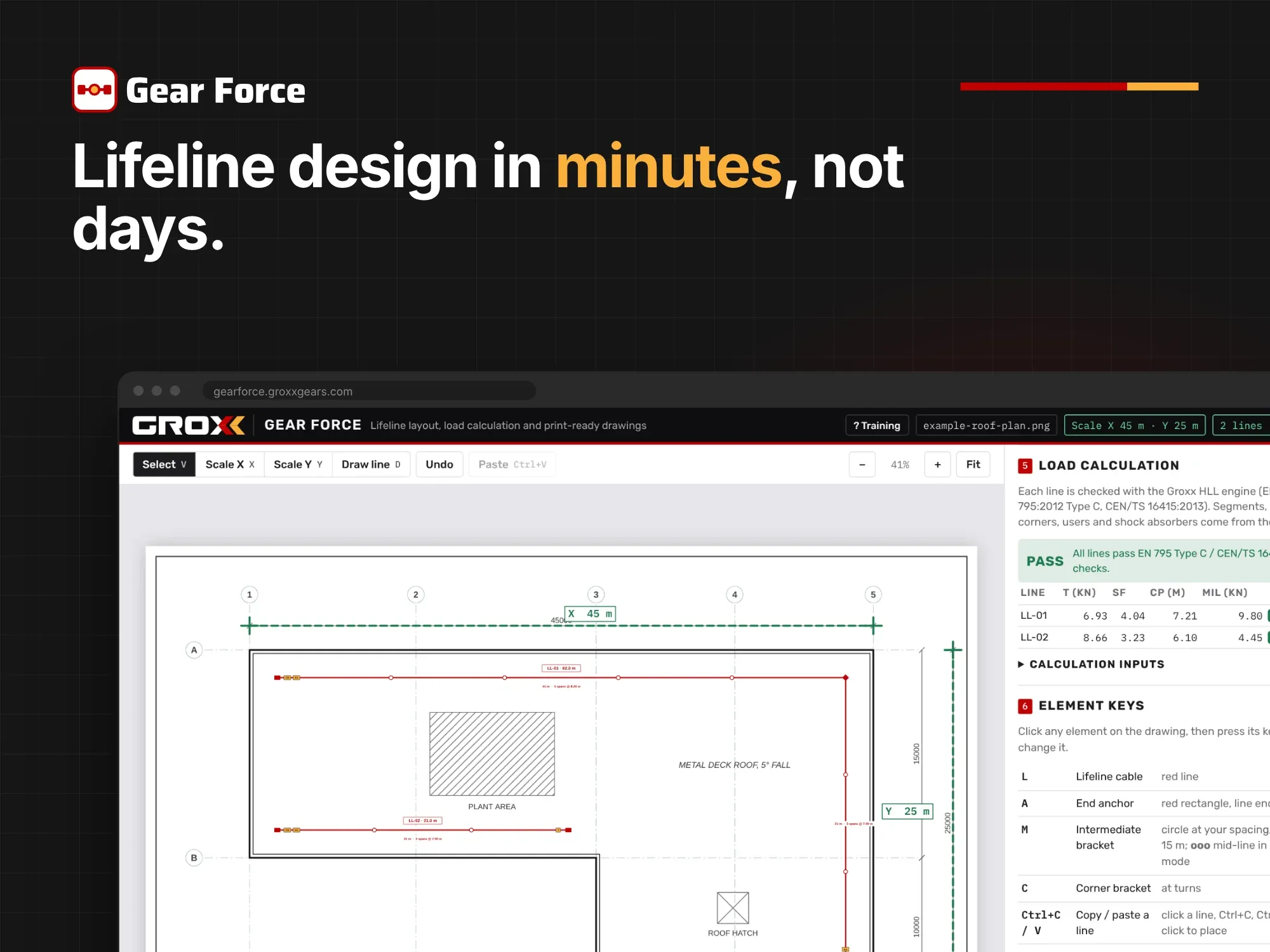
Gear Force is Groxx's lifeline design software. You upload a roof plan, set the scale and draw the cable runs. Gear Force checks every line with the Groxx HLL calculation engine, then builds the bill of materials and the engineering sheet for you. The output is a print-ready drawing pack, produced in minutes rather than days.
8 advantages of designing with Gear Force
1. Start from the drawing you already have
No redrawing. Gear Force works from PDF, DWG, PNG or JPG drawings, or a Google Earth capture of the site when there are no drawings at all. Set the scale from a known dimension on the X and Y axes, or start from a roof template for quick concept layouts.
2. Engineering checks on every line, every time
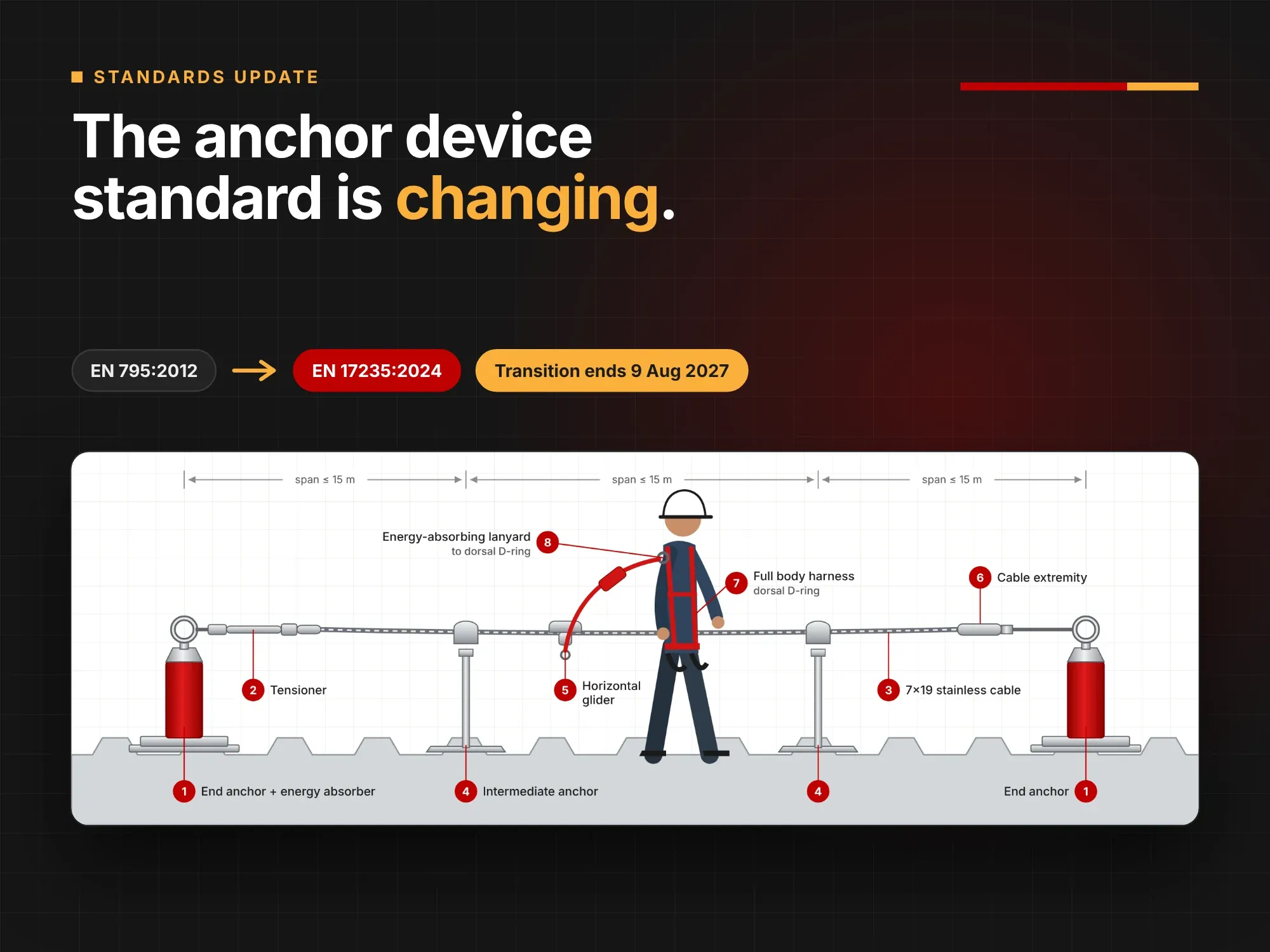
Each lifeline is calculated to EN 795:2012 Type C and CEN/TS 16415:2013 for multiple users. You get a clear pass or fail per line, so an over-length span or too many users on one run is caught at the design stage instead of during commissioning.
3. The right components for the roof
Choose the roof profile (standing seam, Klip-Lok, trapezoidal or concrete) and Gear Force adds the matching brackets and fixings. Designers no longer need to remember which clamp suits which seam, and installers receive a kit that fits the roof they are standing on.
4. An accurate bill of materials, automatically
Spacing, corners and user numbers come straight from the layout. Gear Force produces a complete bill of materials: anchors, intermediates, corners, tensioners, energy absorbers and cable. Quantities match the design exactly, so there are no short shipments, no surplus stock and no second trip to site.
5. Professional deliverables in one click
Publish a print-ready PDF containing the engineering sheet, BOM, load calculation report and component data sheets. That is the pack consultants, main contractors and building owners ask for at tender and at handover, produced consistently for every job.
6. Faster quotes, more projects won
When a layout, a load check and a parts list take minutes, a quote can go out the same day the drawings arrive. Faster, better-documented proposals give installers and contractors a real edge when competing for work.
7. Fewer errors between office and site
Design, calculation and parts list come from one model, so they always agree. Changing a run updates the check and the BOM together. Nobody has to keep three documents in sync by hand.
8. A clean handover into inspection and compliance
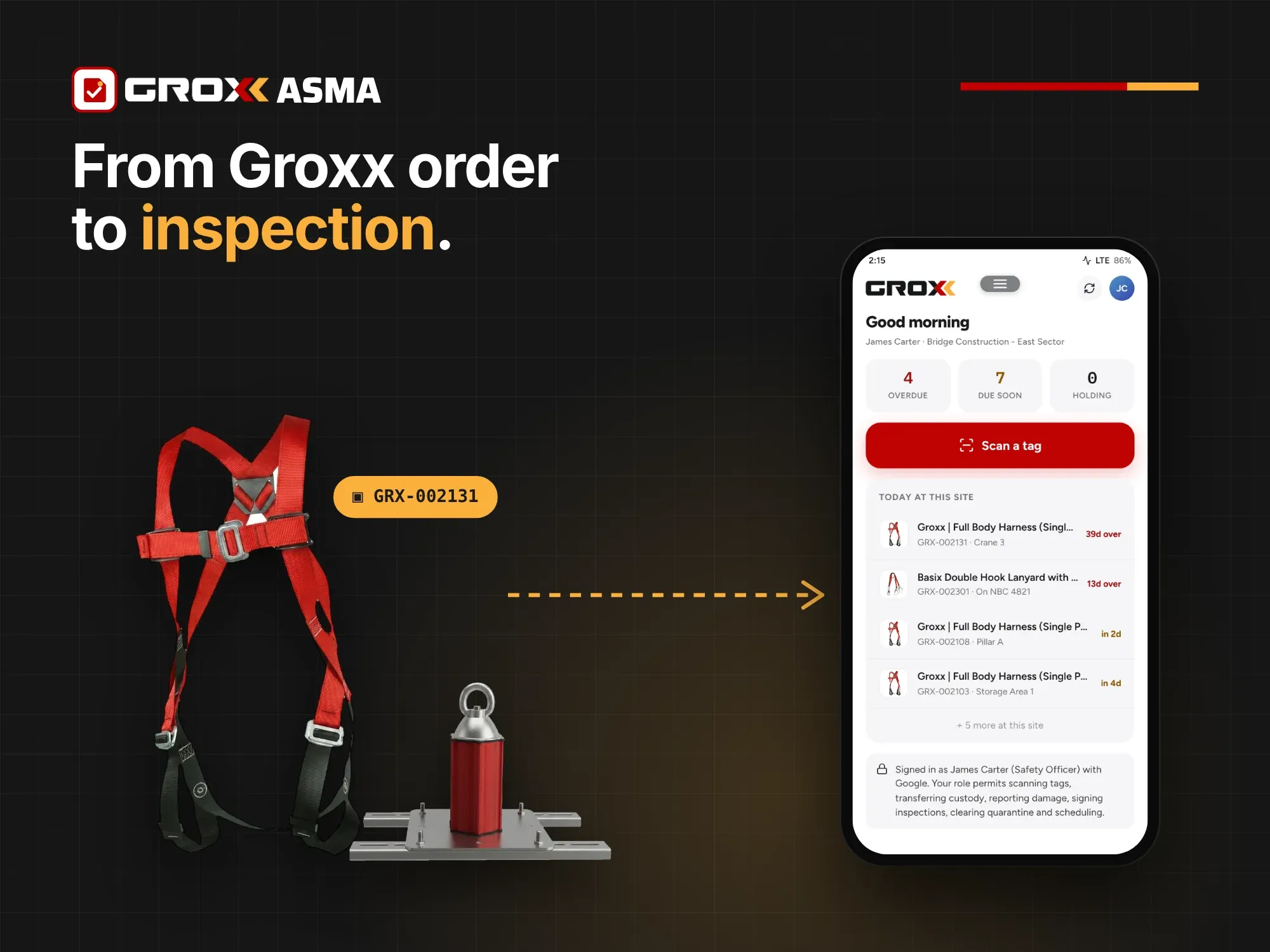
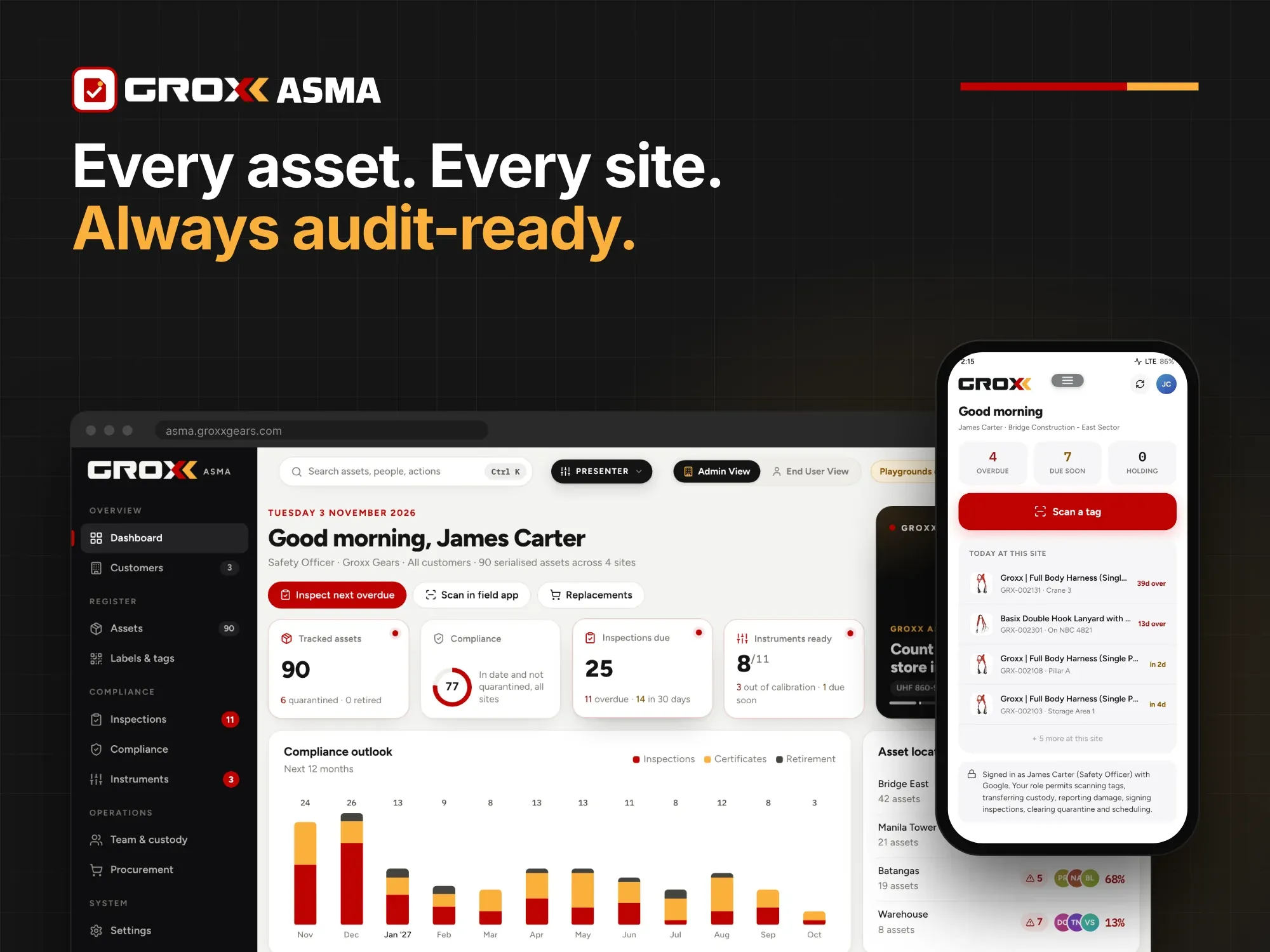
The work does not end at installation. Systems designed in Gear Force and supplied by Groxx can be carried into Groxx ASMA, our compliance software. There every anchor, intermediate, tensioner and absorber becomes a tracked asset with its own inspection schedule. See how ASMA is used.
Manual design vs Gear Force
| Task | Manual process | With Gear Force |
|---|---|---|
| Site layout | Redraw the roof in CAD | Upload a PDF, DWG, image or Google Earth capture and set the scale |
| Load calculation | Spreadsheet per run, checked by hand | Automatic EN 795 Type C / CEN/TS 16415 check with pass/fail per line |
| Roof brackets and fixings | Look up compatibility for each profile | Added automatically for standing seam, Klip-Lok, trapezoidal or concrete |
| Bill of materials | Counted from the drawing | Generated from the layout and always in sync |
| Client documents | Assembled from several files | One print-ready PDF: drawing, BOM, calculation report, data sheets |
| Turnaround | Days | Minutes |
Who benefits
- Fall protection installers: quote faster, order exactly what the job needs and arrive on site with the right brackets.
- Consultants and engineers: receive consistent, standards-referenced calculations and drawings for every system.
- Main contractors and building owners: get a documented, checkable design before anything is fixed to the roof.
- Procurement teams: work from an accurate BOM that maps directly to Groxx part numbers.
Tip: start with a Google Earth capture during the enquiry stage to produce a budget layout and BOM within minutes. Then refine it on the architect's drawing once the project is confirmed.
Frequently asked questions
What drawings can I use?
PDF, DWG, PNG or JPG files, or a Google Earth capture of the site. Set the scale from a known dimension and start drawing.
Which standards are the calculations based on?
Lifeline loads are checked to EN 795:2012 Type C and CEN/TS 16415:2013 for multi-user systems.
Which roof types are supported?
Standing seam, Klip-Lok, trapezoidal and concrete, with the matching Groxx brackets and fixings added automatically.
Does Gear Force replace the engineer?
No. It does the repetitive layout, calculation and documentation work so the designer or engineer can focus on reviewing and approving the system.
How do I get access?
Visit the Gear Force page or contact our team to book a walkthrough using one of your own sites.
Disclaimer: Groxx Gear Force is designed to be used by individuals professionally trained in fall arrest systems. Its main purpose is to help Groxx distributors prepare the bill of materials (BOM) and present lifeline layouts. Verification of the application of Groxx components remains the responsibility of professionally trained individuals or engineers. Groxx will not be held responsible for any errors or incorrect BOMs resulting from misuse of this software or a lack of knowledge on the part of its user.