Why height-safety equipment needs more than a logbook
Every harness, lanyard, anchor point, lifeline and davit on a site is safety-critical. Each one has its own inspection interval and service history, and each can be pulled from use the moment it shows damage. On a single building that is manageable on paper. Across dozens of roofs, towers, plant rooms and contractor crews, paper logbooks and spreadsheets break down. Due dates are missed, quarantined gear finds its way back into the van, and nobody can produce a clean record when the auditor or the safety officer asks for one.
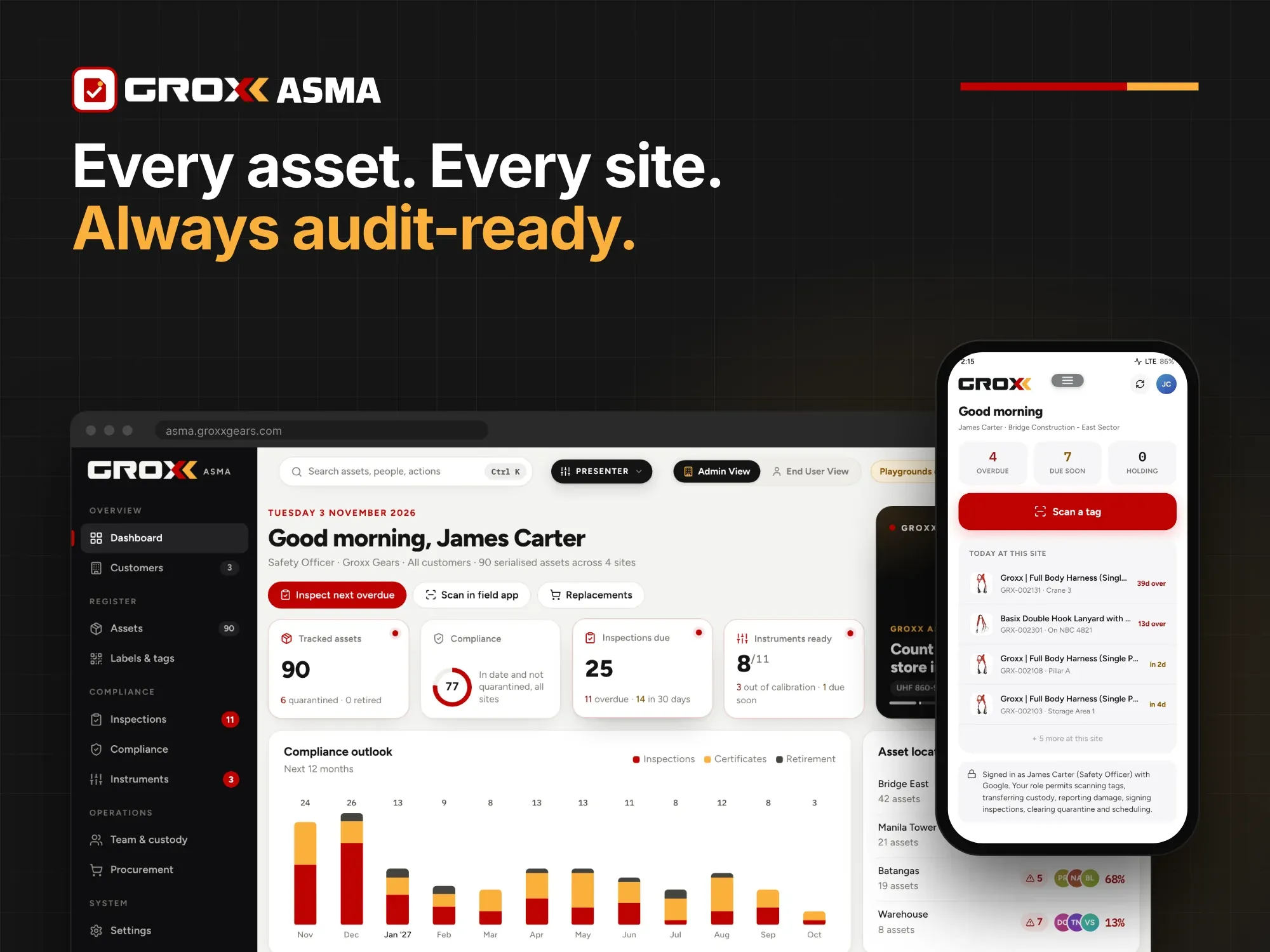
Groxx ASMA is our compliance software built for exactly this problem. It keeps one live register of every height-safety asset, shows what is in date, due or quarantined at a glance, and gives the people doing the checks a field app to inspect and record on the spot.
What Groxx ASMA does
- One asset register: every height-safety asset across customers and sites, in one place.
- Inspection schedules: due, overdue and quarantined status visible at a glance.
- Standards-based checklists: a checklist for each equipment type, so every inspector checks the same points.
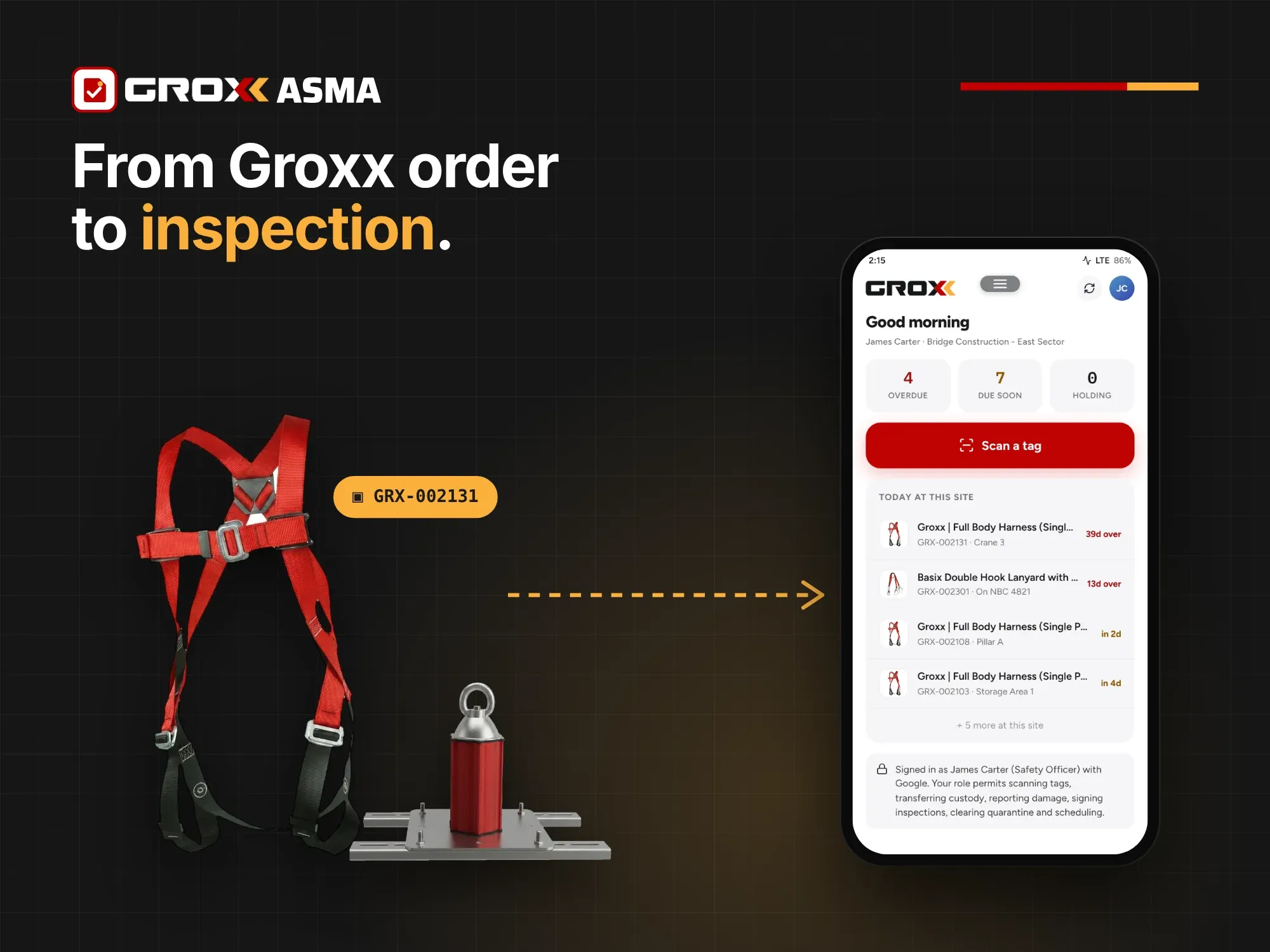
- QR-tagged assets: scan the tag on site with the field app to open the right record and log the inspection.
- Alerts: overdue and quarantined equipment is flagged before it becomes a problem.
- Audit-ready output: print-ready inspection packs and certificates for audits and handovers.
How it works in three steps
- Register: add assets by site and customer, or import them directly from your Groxx order.
- Inspect: scan the QR tag in the field app and complete the standards-based checklist.
- Prove compliance: dashboards, alerts and printable packs keep every site audit-ready.
Applications and use cases
1. Building owners and facility managers
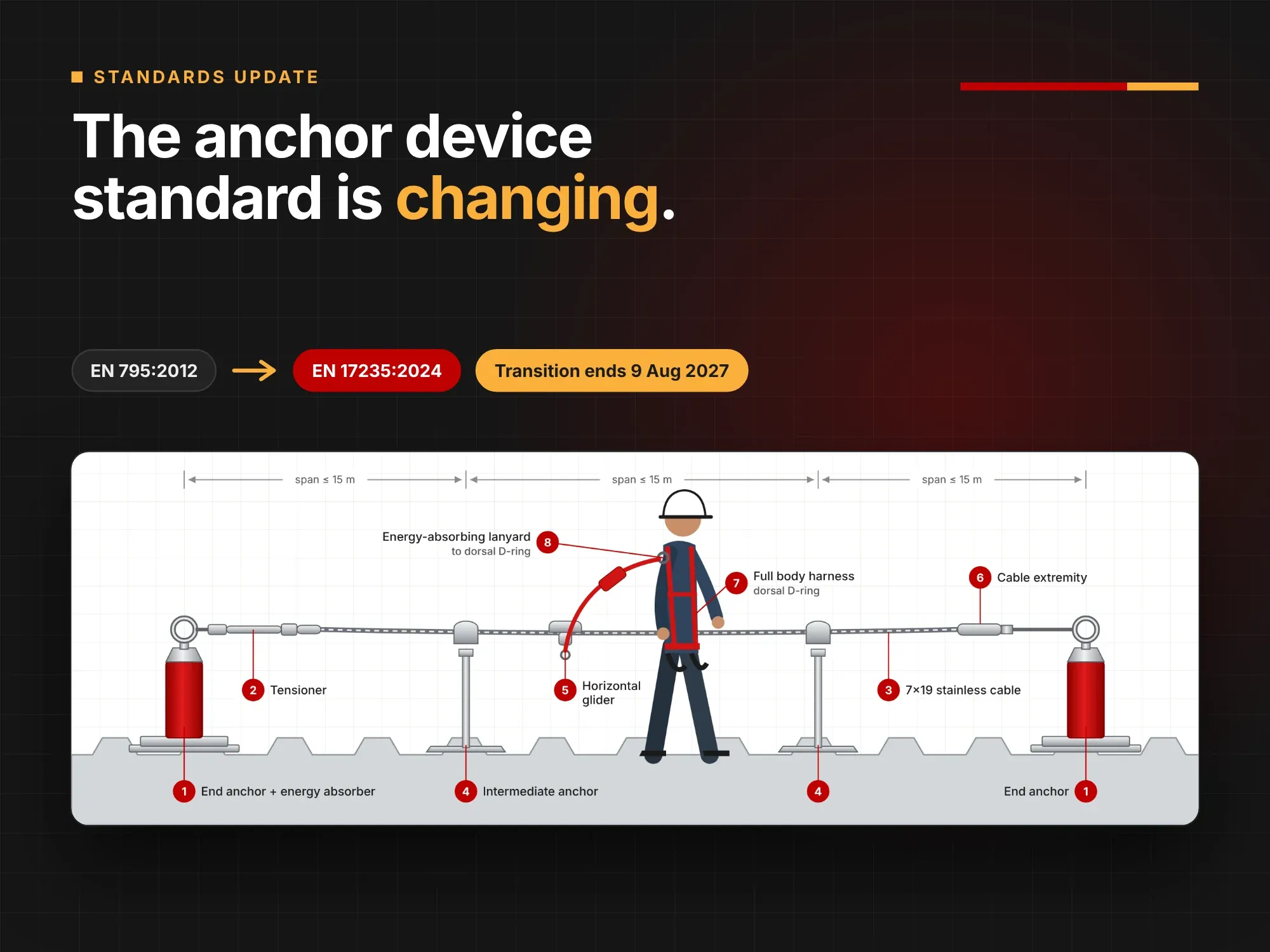
Commercial towers, hospitals, malls and campuses carry permanent fall protection on their roofs and façades: horizontal lifelines, anchor points, vertical ladder systems and davit arms for façade access. Facility teams use ASMA to see, per building and per roof, which systems are due for their periodic inspection, and to hand maintenance contractors a clear list of what to check. When a system fails inspection it is quarantined in the register, so nobody signs out a roof permit against it.
2. Installation and maintenance contractors
Contractors who install and service lifeline systems for many clients use ASMA as their service book. Each client and site has its own asset list. Technicians scan the QR tag on each anchor or lifeline end, run the checklist and close the job on site. Office staff then send the client a print-ready inspection pack instead of re-typing handwritten sheets. Upcoming due dates across the whole client base become a forward work plan rather than a surprise.
3. PPE stores and safety officers
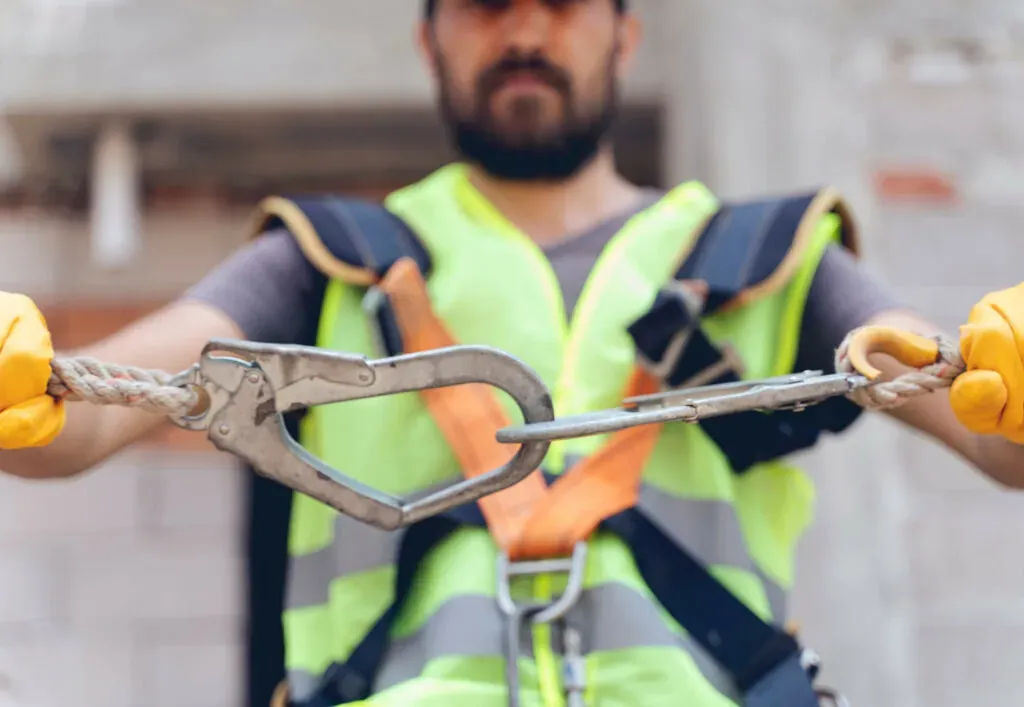
Harnesses, lanyards, self-retracting lifelines and connectors move between workers, sites and vans. Each item gets a QR tag and its own record in ASMA. Before issue, the store or safety officer scans it to confirm it is in date. After an incident or a failed pre-use check it is marked quarantined, and it stays visibly out of service until it is inspected and released. Harness #0142 cannot quietly return to the pool.
4. Building maintenance systems: gondolas, davits and monorails
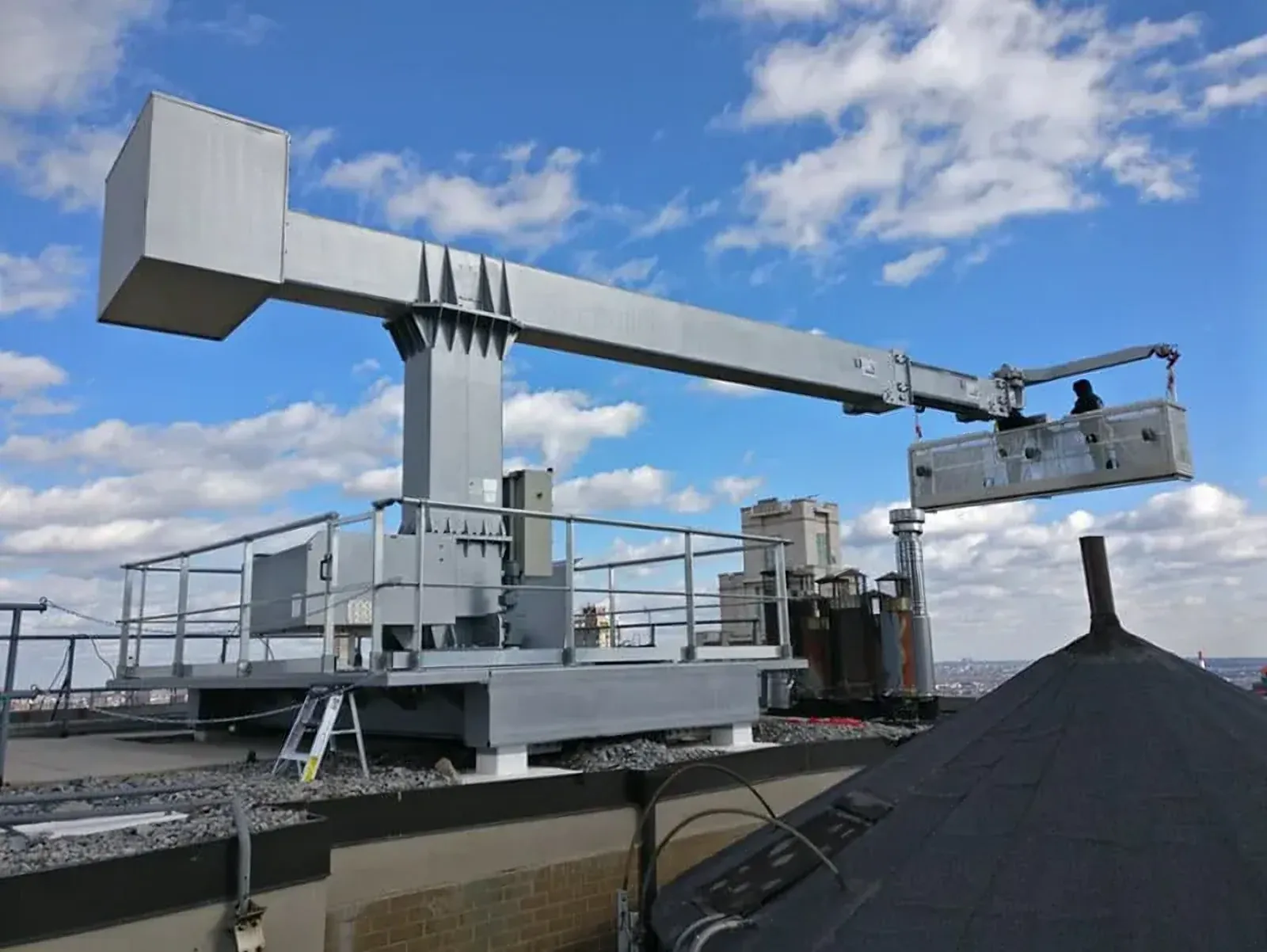
Gondolas, davit systems and monorails carry people over the edge of a building. ASMA keeps the BMS components (davit arms, base plates, baskets, wire ropes and rails) on the same register as the fall protection that backs them up. A façade cleaning contractor and the building manager are then both looking at the same status before work starts.
5. Industrial plants, utilities and confined spaces
Refineries, pump stations, water treatment plants and warehouses mix fall protection with confined space equipment such as tripods, winches and rescue harnesses. These items are often used rarely but must work first time. ASMA tracks them by location ("Tripod Ultra · Pump station") so that the kit kept for an occasional entry is in date when the permit is raised.
6. Multi-site and regional operators
Groups running sites across Singapore and the wider region need a single view. ASMA's dashboards roll up every site so HSE managers can see where overdue or quarantined equipment is concentrated and act on it, without waiting for each site's spreadsheet.
Use cases at a glance
| User | Typical assets | What ASMA solves |
|---|---|---|
| Facility manager | Roof lifelines, anchor points, ladder systems, davits | Knowing what is due per building and keeping failed systems out of use |
| Installer / service contractor | Client lifeline and anchor systems | One service book across all clients, with inspection packs issued on site |
| PPE store / safety officer | Harnesses, lanyards, SRLs, connectors | Issuing only in-date gear and tracking quarantined items |
| BMS operator | Gondolas, davit arms, monorails, wire rope | A shared status between building owner and access contractor |
| Plant / utilities HSE | Tripods, winches, rescue harnesses | Rarely used rescue kit that is always ready |
| Regional HSE manager | All of the above, many sites | One roll-up view of compliance across the portfolio |
Built around the standards your equipment is made to
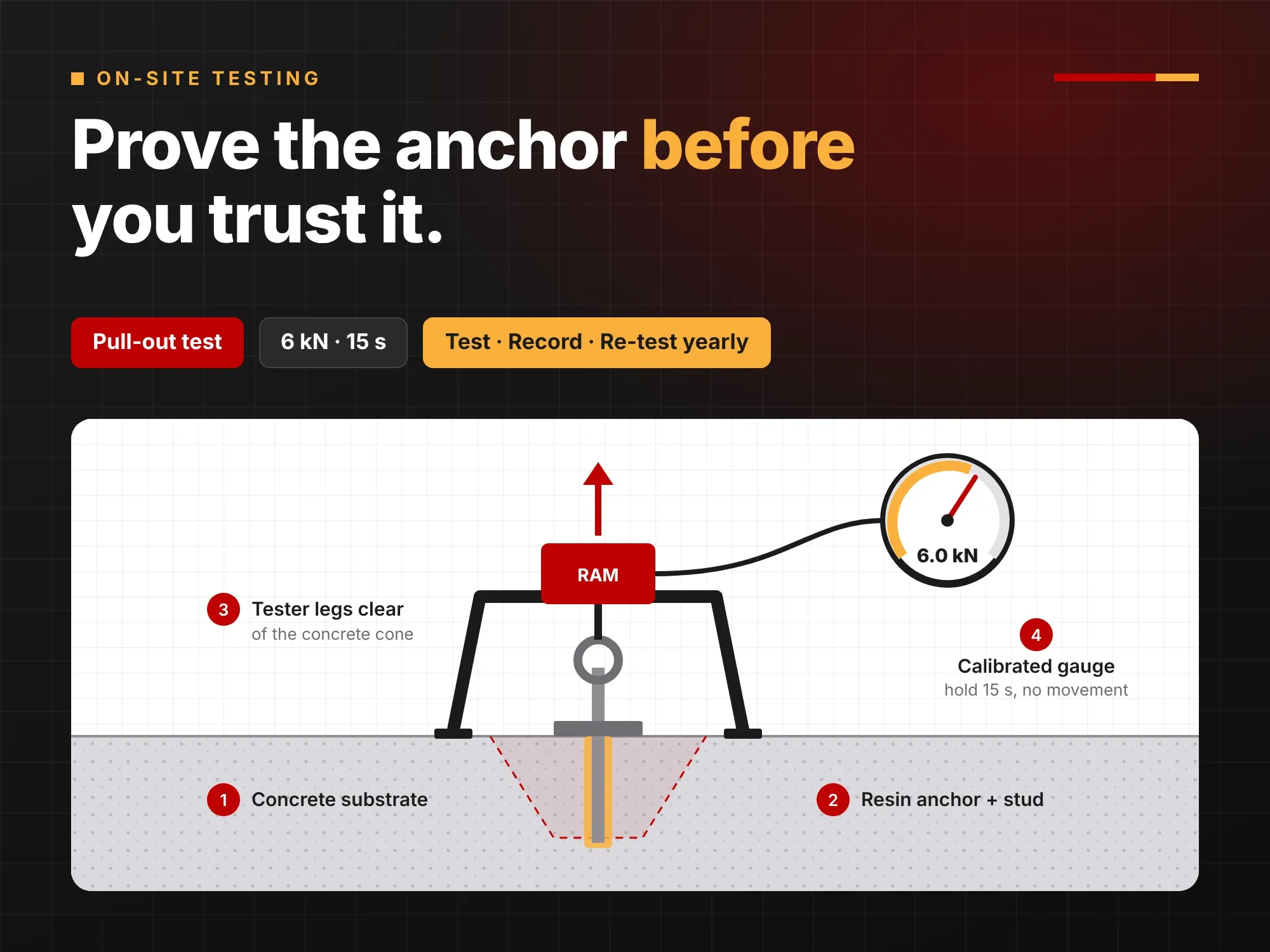
Groxx equipment is made to European standards such as EN 795 for anchor devices, EN 353 for vertical lifelines, EN 361 for harnesses and EN 1808 for suspended access equipment. These standards, and the user instructions supplied with the equipment, expect periodic examination by a competent person, typically at least every 12 months. In Singapore the Workplace Safety and Health (Work at Height) Regulations also place clear duties on employers and occupiers to keep fall prevention equipment in safe working order. ASMA does not replace the competent inspector. It makes sure the inspection happens on time, is recorded the same way every time, and can be proven afterwards.
Tip: tag assets with ASMA QR codes at handover. Inspection history then starts from day one, and the installation record and the first periodic inspection sit in the same file.
Works hand in hand with Groxx Gear Force
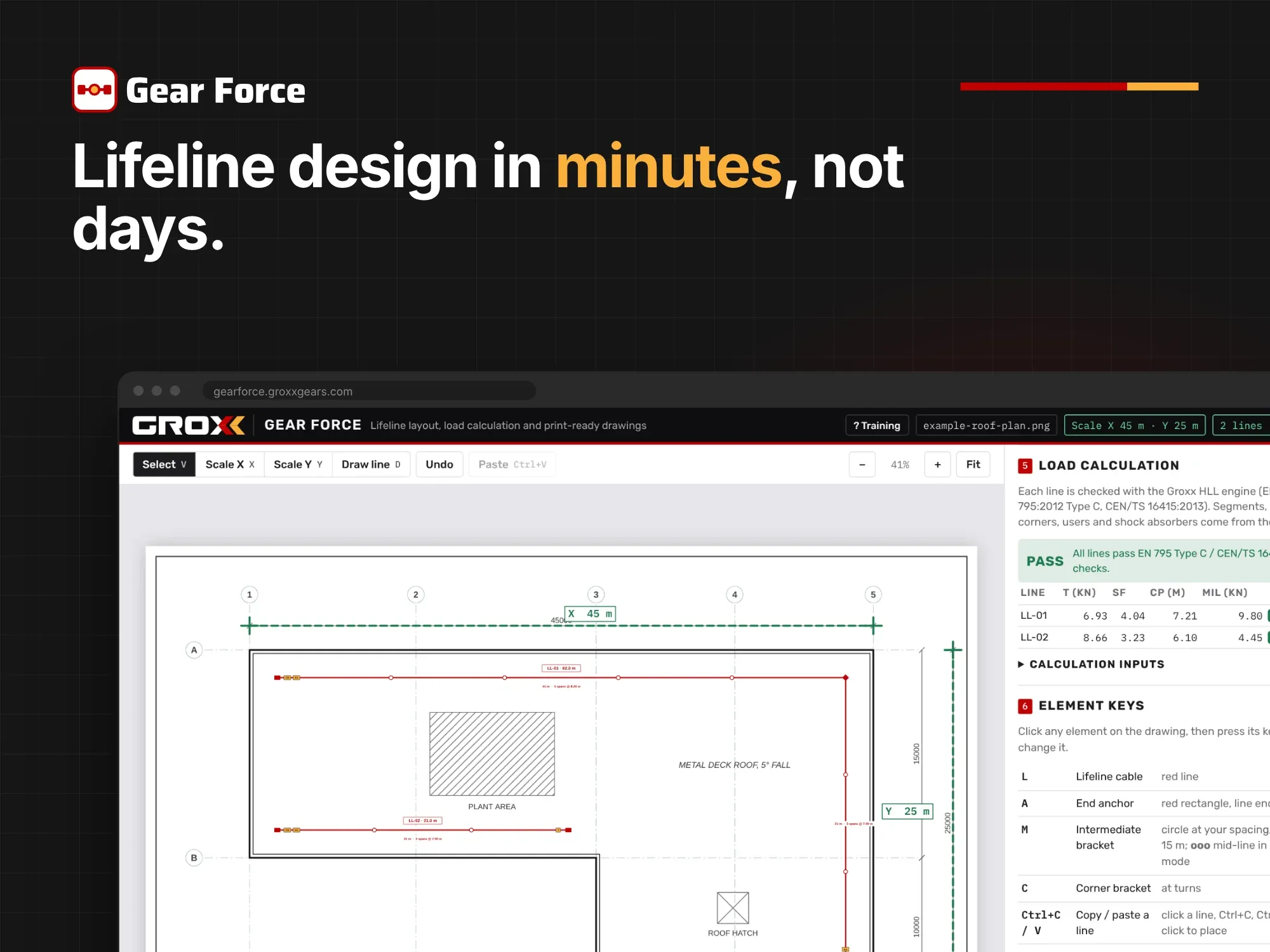
Groxx Gear Force designs the system: lifeline layout, EN 795 Type C load check, bill of materials and drawing pack. Groxx ASMA looks after it once it is installed. Systems designed in Gear Force and supplied by Groxx can be imported straight into ASMA, so every anchor, intermediate, tensioner and absorber on the BOM becomes a tracked asset from the start.
Frequently asked questions
Who is Groxx ASMA for?
Building owners, facility managers, installers and service contractors, PPE stores and HSE teams. In short, anyone responsible for keeping height-safety equipment inspected and in service.
Does it only work with Groxx equipment?
ASMA is built around Groxx systems and can import assets directly from your Groxx order. Contact us to discuss registering equipment from other suppliers on your sites.
How do inspectors record checks on site?
With the field app: scan the asset's QR tag, complete the standards-based checklist, and the result updates the register and the dashboard.
How do I get started?
Visit the Groxx ASMA page or contact our team for a walkthrough using your own sites and equipment.