For more than a decade, EN 795:2012 has been the reference standard for fall protection anchor devices, from single roof anchors to horizontal cable lifelines. That is now changing. Europe has split anchor devices into two separate standards: one for permanently installed anchors and one for temporary anchors. The first has already been harmonised and has a firm deadline.
This article explains what has changed, what is still coming, the key dates, and what it means for building owners, specifiers and installers in Singapore and the region.
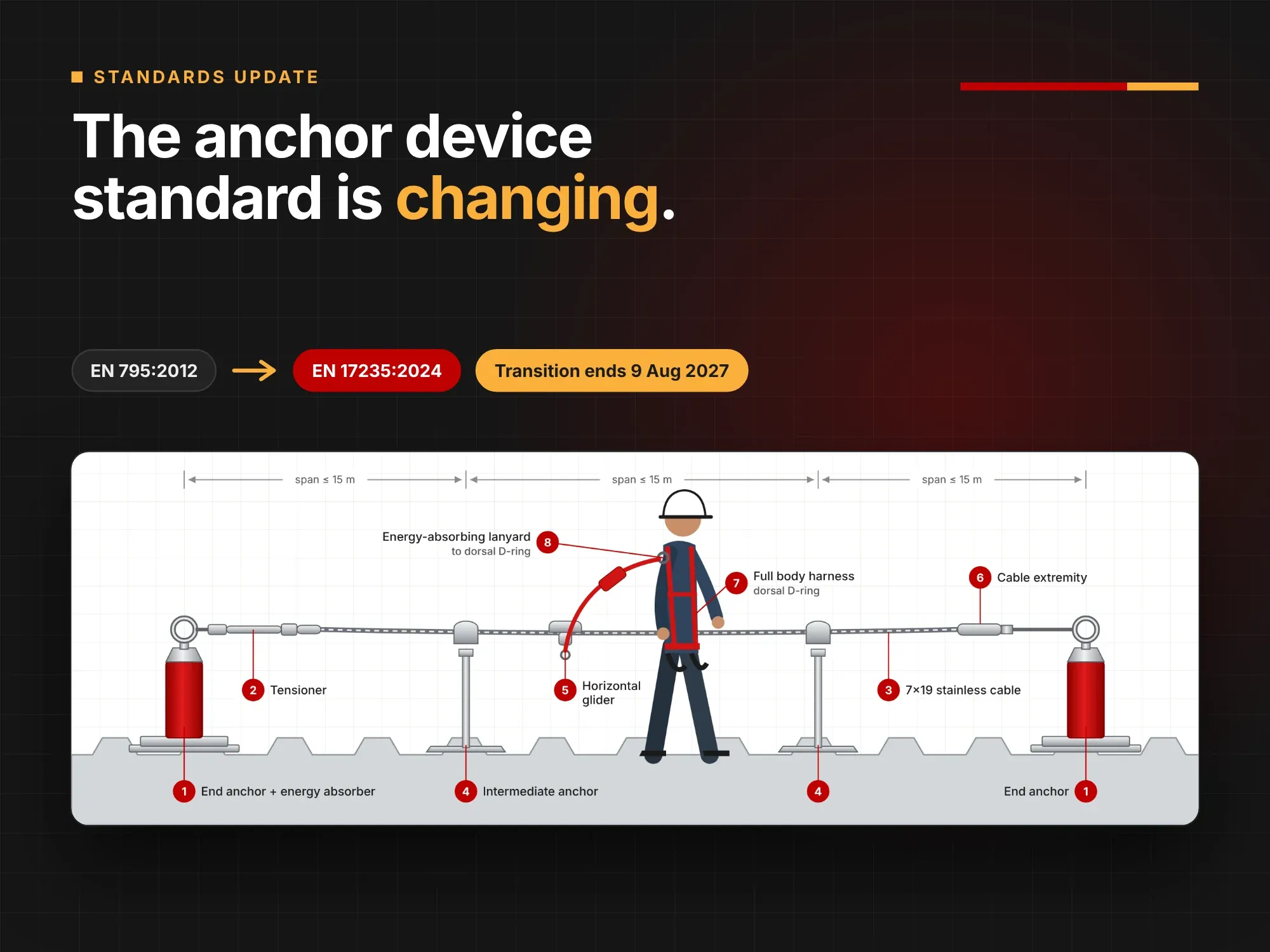
In short: permanent anchors and lifelines move to EN 17235:2024, harmonised in February 2026 with a transition ending on 9 August 2027. EN 795 is being revised to cover temporary anchor devices only, with publication expected around 2027. Existing compliant installations do not need to be replaced.
Why EN 795 is being split
EN 795:2012 covered every type of anchor device under the PPE framework, whether it was a portable beam clamp or a lifeline bolted permanently to a roof. In practice, a permanently fixed anchor behaves like part of the building. Its performance depends on the fixings, the substrate and the structure as much as on the device itself.
So the European approach now treats the two families differently:
- Permanent anchor devices, fixed into the structure, are treated as construction products under the Construction Products Regulation (EU) No 305/2011 (CPR). These are now covered by EN 17235.
- Temporary anchor devices, which are not permanently secured to the structure, remain personal protective equipment under the PPE Regulation (EU) 2016/425. These will be covered by the revised EN 795.
The latest update: EN 17235:2024 for permanent anchors
EN 17235:2024, "Permanent anchor devices and safety hooks", was published in September 2024 and harmonised under the CPR in February 2026. It is now the route to CE marking for anchors installed permanently into structures.
What EN 17235 covers
| Kit | Device type | Typical example |
|---|---|---|
| Kit A | Single anchor point | Roof or wall anchor post, eyebolt |
| Kit B | Safety hook | Roof safety hook (previously EN 517, now withdrawn) |
| Kit C | Horizontal flexible (cable) anchor line | Horizontal cable lifeline system |
| Kit D | Horizontal rigid (rail) anchor line | Overhead or rail lifeline |
What changes in testing
- Whole-system assessment: the device is assessed together with its fixings and the supporting substrate, not as a stand-alone component.
- Multiple users built in: loads are based on the number of users, up to two for Kits A and B and up to four for Kits C and D. Multi-user cable systems no longer rely on a separate technical specification.
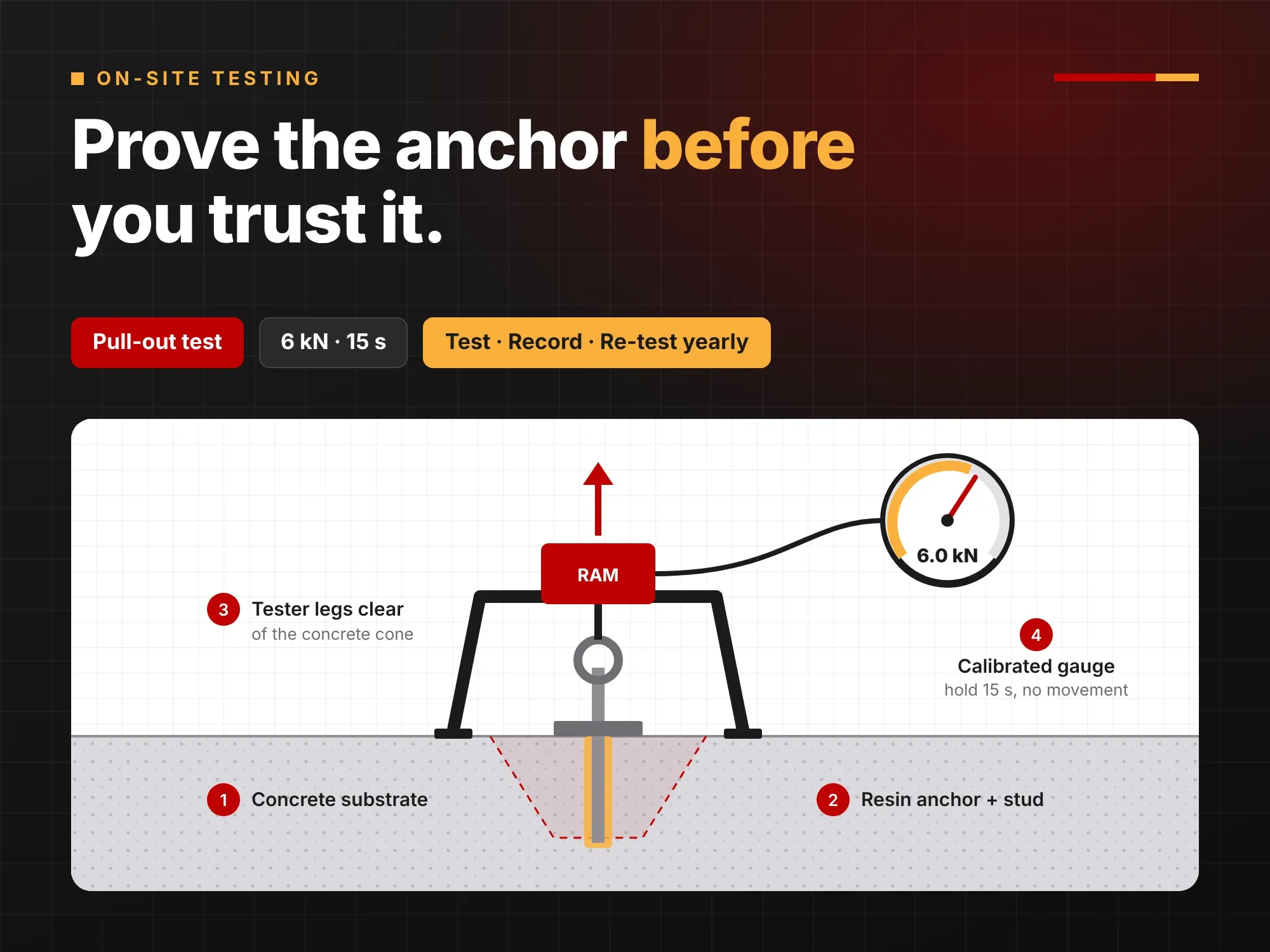
- Static tests to destruction: for example, Kit C systems are tested to destruction or to a maximum of 27 kN. Each configuration needs at least three static tests so that a characteristic strength can be calculated.
- Durability: mandatory durability and corrosion-resistance criteria.
- Declaration of Performance: a notified body assesses the product, and the manufacturer issues a Declaration of Performance (DoP) with the CE marking.
A supporting, non-harmonised standard is also being drafted. It will cover installation, inspection, installer competency, user instructions and design guidance.
What is coming: the revised EN 795 for temporary anchors
The revised EN 795 will supersede EN 795:2012 and narrow its scope to temporary, single-user anchor devices: equipment that is not permanently secured to the structure, such as tripods, davits used as temporary anchors, beam clamps, slings and counterweight devices.
- New type classes: the familiar Types A–E are being replaced. The latest industry update describes Type 1 (based on the former Type B, transportable) and Type 2 (based on the former Type E, deadweight anchors). Former Types C and D are absorbed into these.
- Multi-user devices excluded: temporary multi-user anchors stay outside EN 795. CEN/TS 16415 is expected to be revised for them afterwards.
- Expanded test methods: new definitions and test set-ups for flexible and rigid anchor lines, updated test lanyards and masses, and clearer marking and instructions (anchor line type, loading directions and compatibility).
Status: the draft has passed public enquiry and has moved to the formal vote stage at CEN (late 2026). Industry bodies expect publication around early 2027, with harmonisation under the PPE Regulation later in 2027. Until then, EN 795:2012 remains the current standard for temporary devices.
Key dates at a glance
| Date | Milestone |
|---|---|
| September 2024 | EN 17235:2024 published (permanent anchor devices and safety hooks) |
| February 2026 | EN 17235 harmonised under the CPR. Coexistence period begins. |
| Late 2026 | Revised EN 795 (temporary anchors) at CEN formal vote |
| Early 2027 (expected) | Revised EN 795 published, superseding EN 795:2012 |
| 9 August 2027 | End of transition. New permanent anchor devices placed on the EU market must be CE marked to EN 17235. |
| Later 2027 (expected) | Revised EN 795 harmonised under the PPE Regulation |
What it means for you
Building owners and facility managers
- No need to rip out existing systems. Anchors and lifelines installed and certified under EN 795:2012 remain valid. Keep them inspected and maintained as normal.
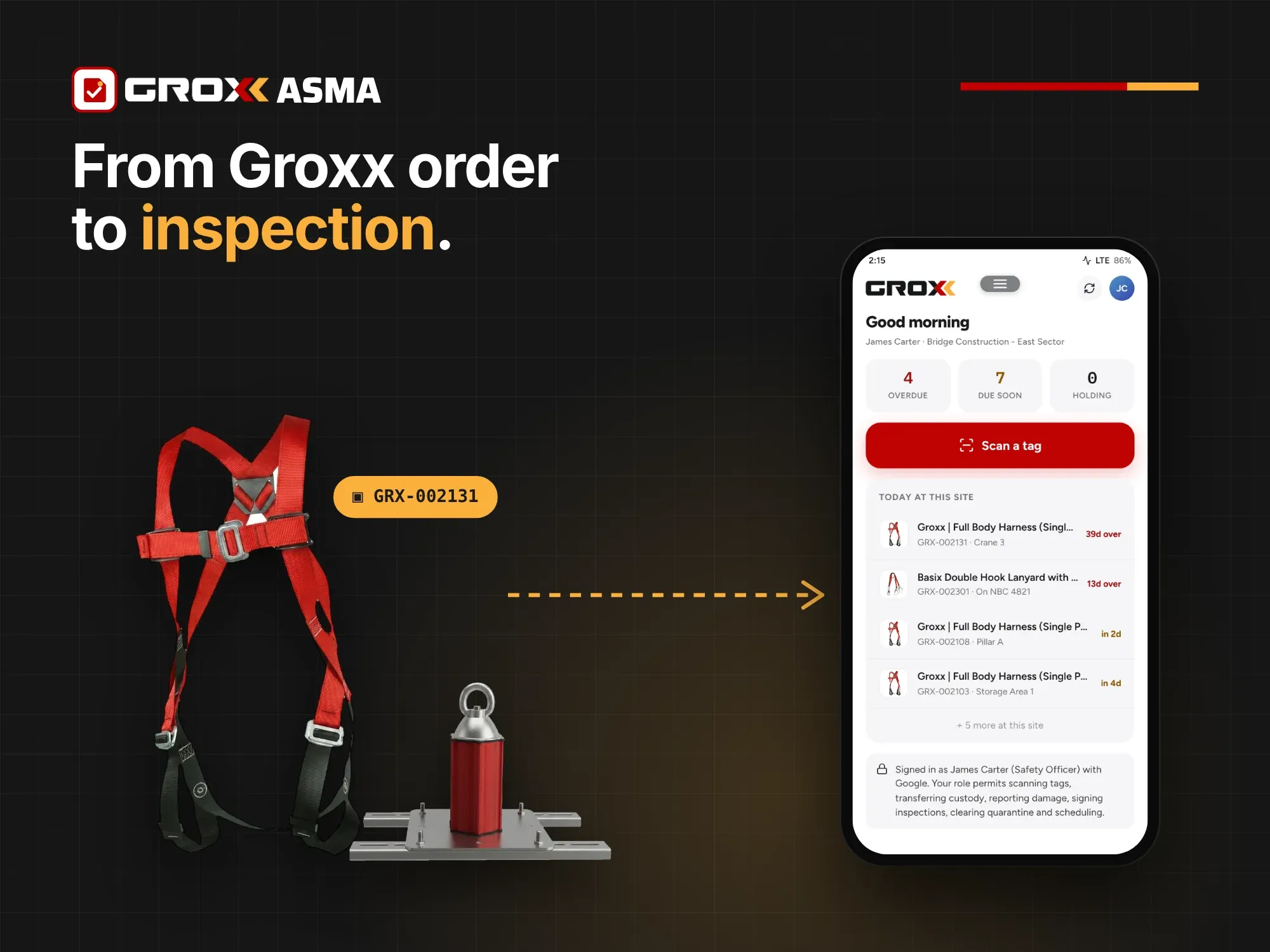
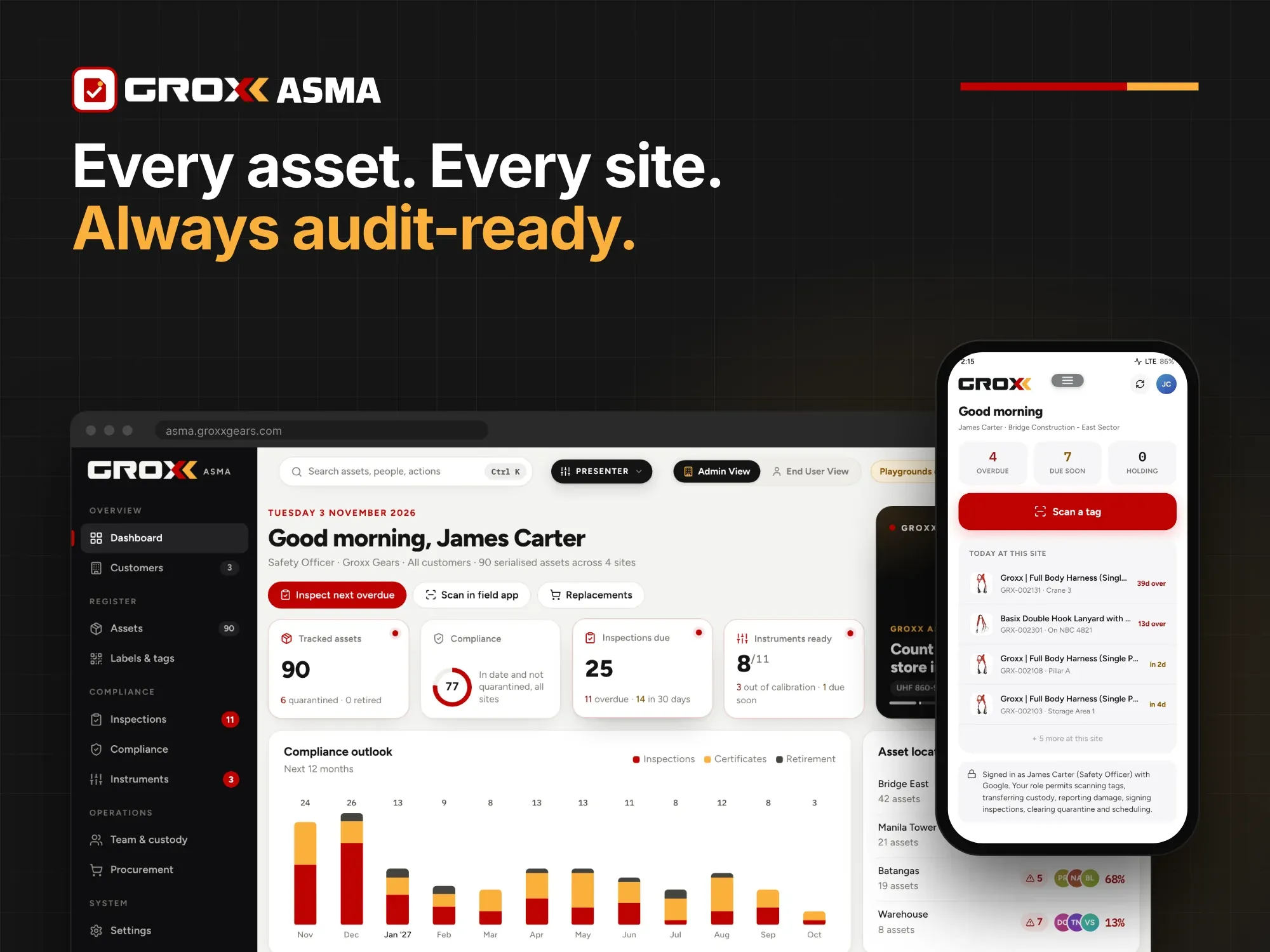
- Records matter more than ever. Keep installation certificates, test records and periodic inspection reports for every system. A tool such as Groxx ASMA keeps this in one place.
- Plan new projects with the new standard in mind. For new permanent installations, especially near or after August 2027, ask for products with an EN 17235 Declaration of Performance.
Consultants and specifiers
- Update specifications to reference EN 17235 for permanent anchors and lifelines, and EN 795 for temporary devices only.
- Note that EN 17235 test results relate to specific substrates and fixings. Match the specified product to the actual roof or structure.
- For multi-user horizontal lifelines, EN 17235 Kit C now covers up to four users directly.
Installers and contractors
- Expect manufacturers' installation instructions, approved substrates and fixing details to become more prescriptive. Follow them exactly.
- Watch for the upcoming installation and competency guidance supporting EN 17235.
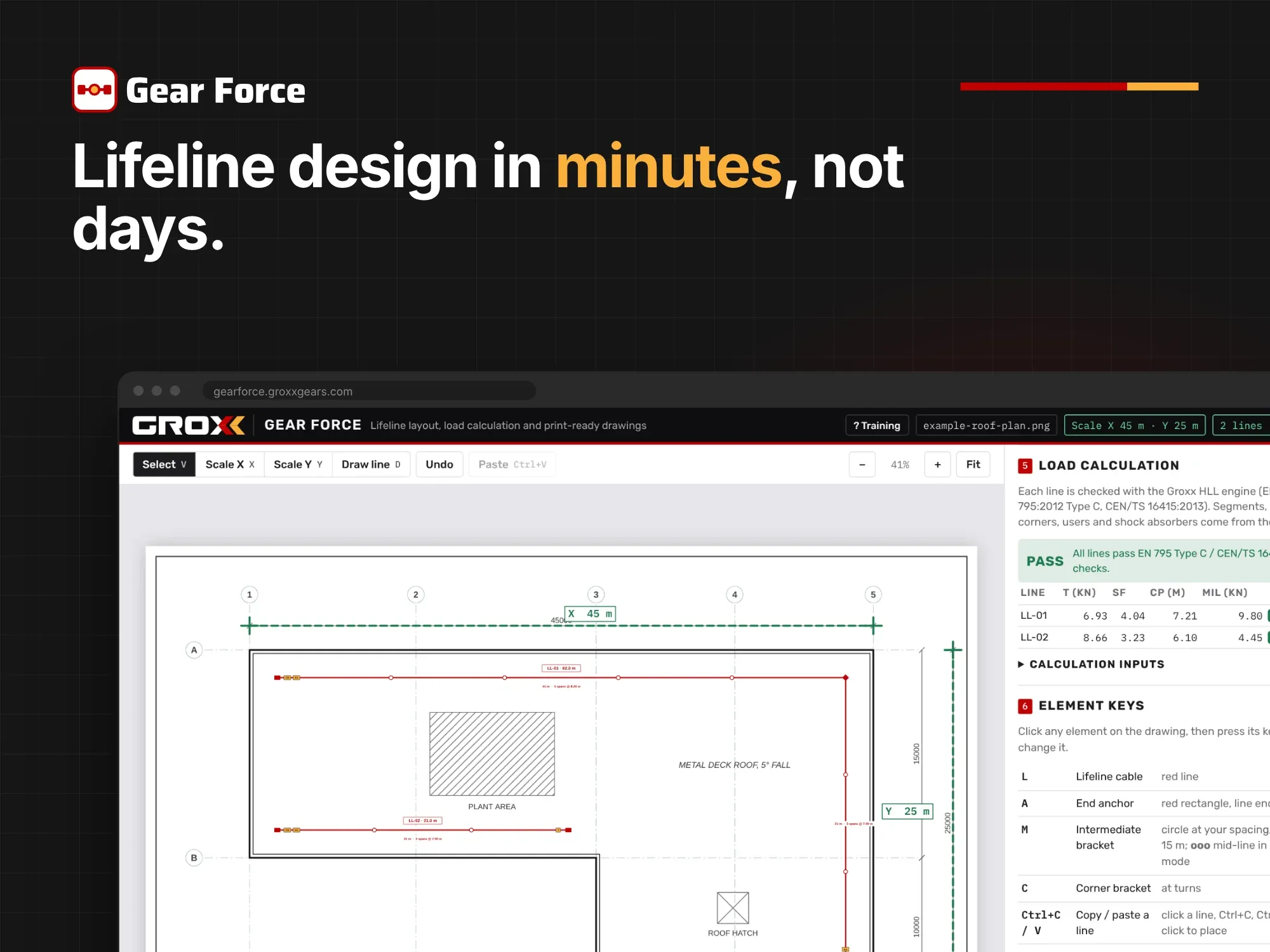
- Use design tools that apply the correct load cases. Groxx Gear Force checks each line and produces the calculation report needed for handover.
Does this apply in Singapore and ASEAN?
EN 17235 and the revised EN 795 are European standards. Their legal force sits with the EU's CE marking regime. However, EN standards are widely specified on projects across Singapore, Australia and the ASEAN region. Many consultants and main contractors write them into tenders as the benchmark for anchor and lifeline performance. In practice, the European changes will shape specifications here too. Local requirements, including Singapore's Workplace Safety and Health (Work at Height) Regulations and any applicable Singapore Standards, continue to apply in full.
How Groxx can help
Groxx Gears supplies anchor points, horizontal lifelines, vertical lifelines and temporary anchor devices with full certification documentation. Every product page has a downloadable data sheet showing the standards each item is tested to.
If you are planning a project around the 2027 transition, talk to our team. We can confirm the certification status of each product for your specification and help you document existing systems.
Frequently asked questions
Is EN 795:2012 still valid?
Yes. It remains the current standard for temporary anchor devices until the revised EN 795 is published. For permanent anchors, EN 795:2012-based certification can still be used until the end of the EN 17235 transition on 9 August 2027.
Do I need to replace my existing roof anchors or lifelines?
No. The change applies to products placed on the market, not to compliant systems already installed. Continue periodic inspection and maintenance.
What happens to CEN/TS 16415?
For permanent systems, multi-user loading is now built into EN 17235. For temporary multi-user devices, CEN/TS 16415 is expected to be revised once the new EN 795 is finalised.
What happened to EN 517 roof safety hooks?
Roof safety hooks are now covered as Kit B in EN 17235, and EN 517 has been withdrawn.
This article summarises publicly available information on the status of EN 795 and EN 17235 as of November 2026, including industry updates from the BSIF Height Safety Group. Standards dates, particularly for the revised EN 795, may change as the CEN process completes. Always refer to the published standard and your notified body for certification decisions.